
Iamblichus
On the Pythagorean Life

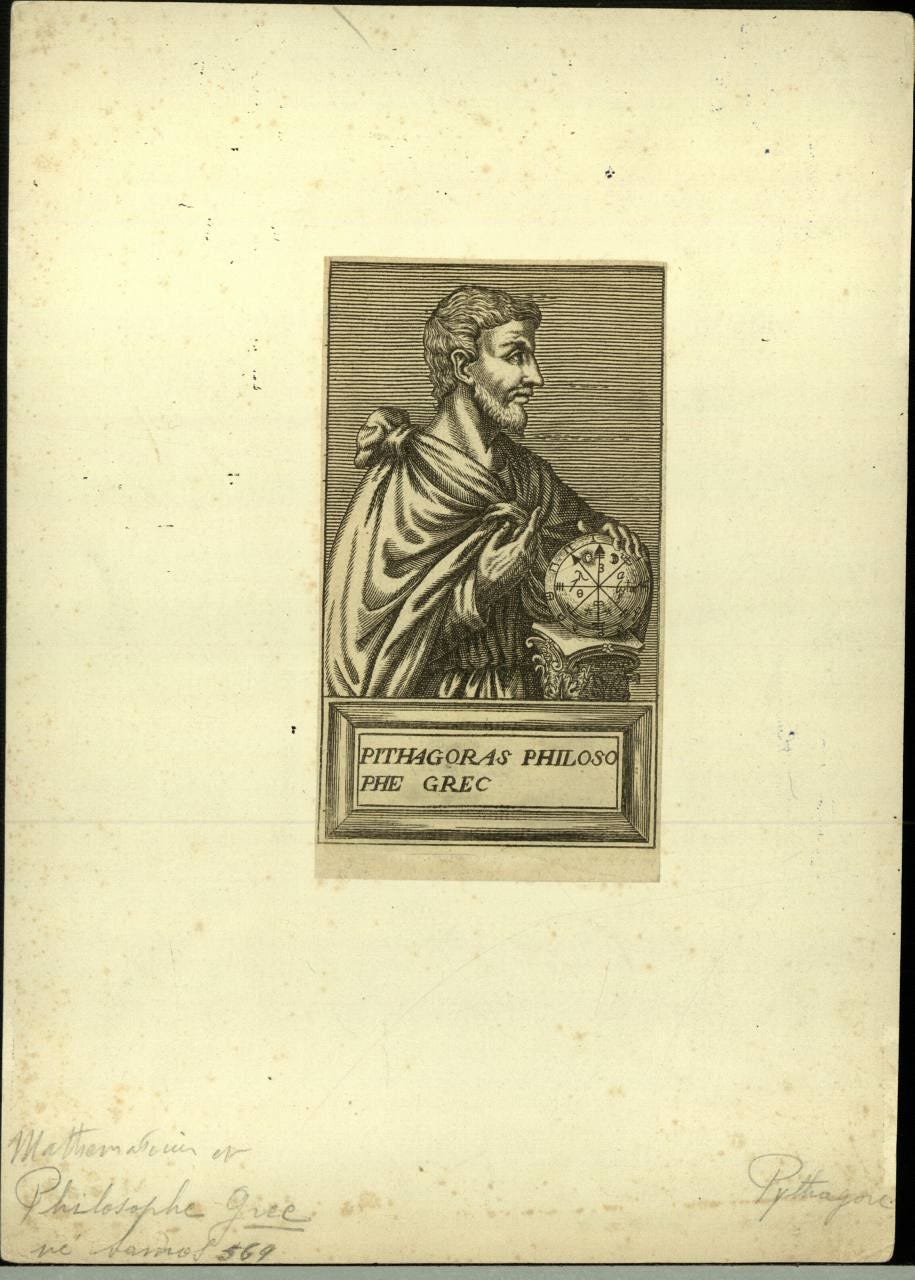
Iamblichus was a Platonist philosopher who lived and worked in the 4th century of the Common Era. He was the son of a wealthy landowning family in Syria, and was probably educated at Antioch, then the provincial capital. What is, perhaps, most odd about his work On the Pythagorean Life (de vita Pythagorica, or VP) is that it followed the Life of Pythagoras by the older Platonist, Porphyry. This work was, however, a four volume history of philosophy from Homer to Plato, while Iamlichus’s work was a ten-volume study of Pythagorean philosophy. (Clark 1989, ix.)
All this leads us to wonder why Iamblichus, working between the years 313 and 326, chose to produce this work on Pythagorean thought and practice. The answer may well lie in the adoption of Christianity on the part of the emperor Constantine, which led to the need for Graeco-Roman philosophers to clarify and present their own tradition in a new light.
In Gillian Clark’s translation and analysis, Iamblichus’s work emerges not merely as a simple biography of a historical philosopher, but as an extensive manual designed to establish an alternative way of life rooted in ancient Greek wisdom (Clark 1989, 1). Writing against the backdrop of an expanding Christian empire, Iamblichus shapes his narrative of Pythagoras into a protreptic, an exhortation meant to guide readers toward moral and spiritual purification through the structured framework of a Neopythagorean school (Clark 1989, 9).
The text outlines Pythagoras’s journey from his early education in Egypt and Babylon to the eventual establishment of his community in Croton, Italy (Clark 1989, 11). Throughout this narrative, Iamblichus highlights the supreme importance of community life, which is characterized by the sharing of all material possessions, strict periods of silent contemplation, and a shared dedication to intellectual and ethical self-governance (Clark 1989, 15). Pythagoras is portrayed as a bridge between the human world and the divine, acting as a guide who could translate cosmic order into human society (Clark 1989, 21).
A major element of this Pythagorean life is the pursuit of cosmic harmony and rational structure, which the community believed permeated all of reality (Clark 1989, 31). Rather than treating mathematics and number theory as dry, abstract intellectual exercises, Iamblichus explains that the study of numerical relationships serves as a primary method for tuning the human soul to the divine proportions of the cosmos (Clark 1989, 33). This emphasis on order extends naturally into physical and behavioral practices, including a strictly monitored diet, the complete rejection of animal sacrifice, and the regular use of specific musical modes and melodies designed to soothe emotional disturbances and re-establish internal harmony (Clark 1989, 42). This careful attention to bodily equilibrium included a complete ban on foods deemed to be “windy”, as the resulting internal flatulence was believed to disrupt the tranquil clarity and purity required for philosophical contemplation (Clark 1989, 47). Yes, that means no beans.
Ultimately, the text reveals that the primary goal of the Pythagorean school is the attainment of true wisdom, which Iamblichus identifies as a genuine, effortless knowledge of things that are unchanging and divine (Clark 1989, 57). Under Clark’s reading, the work serves as a comprehensive ethical summation of the classical tradition, offering a vision where philosophy functions as a lifelong practice of communal, ecological, and personal alignment with the intelligible order of the universe (Clark 1989, 87).
Bibliography and further reading
Clark, G. (trans.) (1989) Iamblichus: On the Pythagorean Life. Liverpool: Liverpool University Press.
Dillon, J. M. (1973) The Middle Platonists: A Study of Platonism 80 B.C. to A.D. 220. London: Duckworth.
Dillon, J. M. and Hershbell, J. P. (trans.) (1991) Iamblichus: On the Pythagorean Way of Life. Atlanta: Scholars Press.
O’Meara, D. J. (1989) Pythagoras Revived: Mathematics and Philosophy in Late Antiquity. Oxford: Clarendon Press.
Porphyry (1965) Life of Pythagoras, in Hadas, M. and Smith, M. (trans.) Heroes and Gods: Spiritual Biographies in Antiquity. London: Routledge and Kegan Paul.
Shaw, G. (1995) Theurgy and the Soul: The Neoplatonism of Iamblichus. University Park: Pennsylvania State University Press.