
Make Your Own Roman Punch!
Conditum Paradoxum

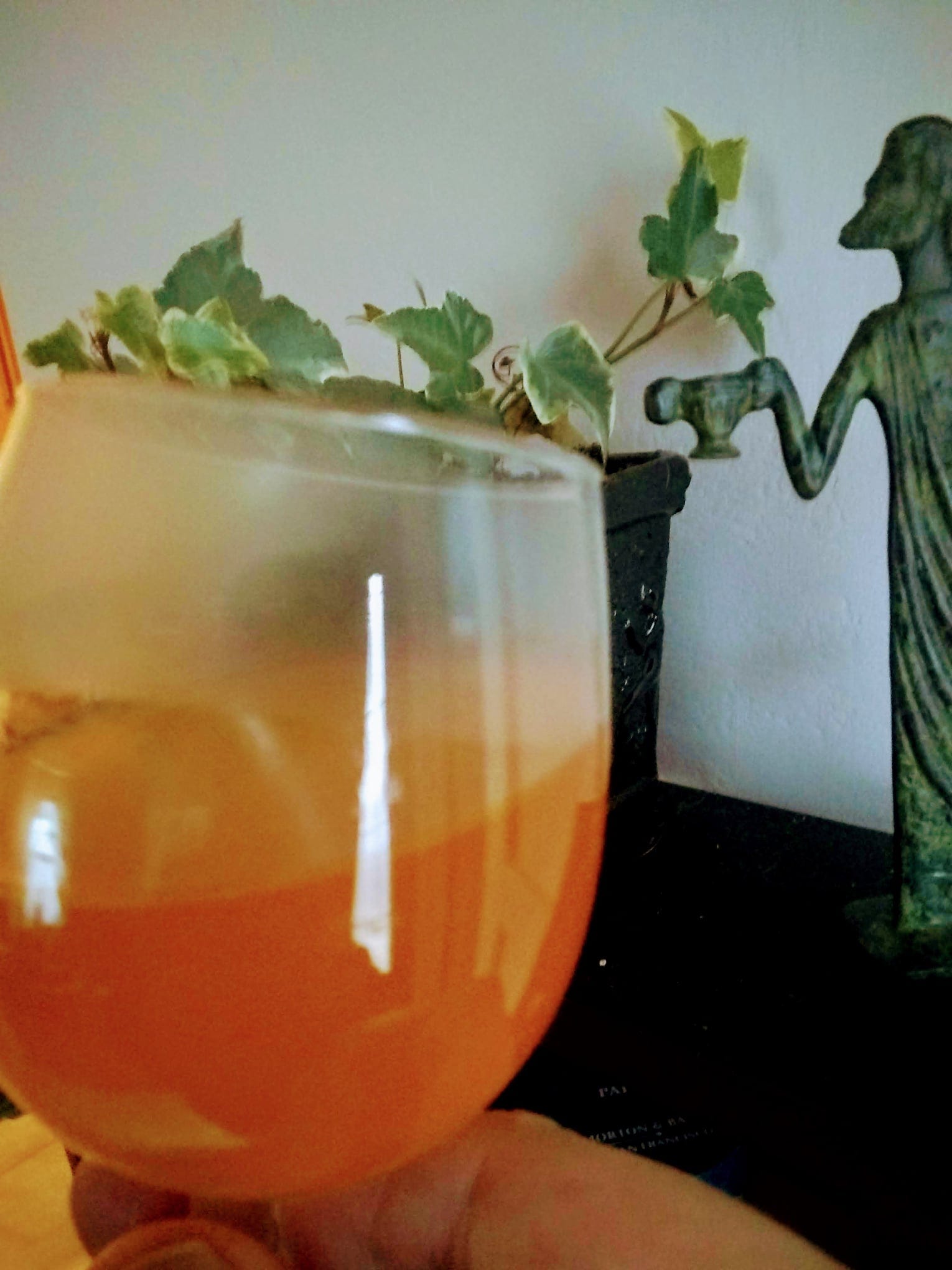
Today being the first day of Saturnalia, I thought my readers might appreciate learning how to make an authentic Roman holiday spiced wine.
Known as conditum, Roman spiced wine was popular during the winter holidays. There were several variations on the recipe, but conditum paradoxum (spiced wine surprise) seems to have been the preferred beverage of Saturnalia.
We know the exact ingredients of conditum thanks to several sources, not least of which is the oldest known cookbook in Europe, de re Coquinaria by Apicius. The main ingredients of any conditum are white wine, honey, and black peppercorns. The wine was made extra luxurious for Saturnalia by adding saffron, mastic[1], bay laurel, fennel seeds, and dates.[2]
It is an odd combination, but the results are quite nice:
Conditum Paradoxum (Roman mulled wine)
1 bottle white wine
1/2 cup honey
1 date
1 teaspoonful black peppercorns
1/2 teaspoonful of fennel seeds
2 Bay laurel leaves
A generous pinch of saffron
Bring about a quarter of the bottle of wine, honey, peppercorns, fennel seeds, saffron and the date to a boil. Lower heat and add the remainder of the wine. Simmer on very low (not boiling) for 10 minutes. Let it cool and strain the contents into a bottle or pitcher. Chill for at least a couple of hours. It was served chilled even in antiquity, so keep it in the refrigerator.
The golden color and contrast of flavors is really amazing.
You can make yourself a batch of conditum and join our Saturnalia Zoom Party this Saturday 21 December from 2-4 pm Eastern Time (11 am – 1 pm Pacific), 7 - 9 pm GMT). Bring your conditum, wine or other festive drink and fun food, and I will present Saturn and Saturnalia through images, discussing the history and impact of this winter solstice festival on our culture, as well as some of its mysterious and even creepy origins! Click>>> Saturnalia Zoom Party<<< to join the party on Saturn’s Day, 21 December.
Io Saturnalia!
[1] Mastic (Greek: Μαστίχα) is a resin obtained from the mastic tree (Pistacia lentiscus) with certain medicinal properties. It is also known as tears of Chios,being traditionally produced on the island Chios, and, like other natural resins, is produced in "tears" or droplets. Its flavor is similar to pine and cedar resin. See: Huwez, Farhad; Thirlwell, Debbie; Cockayne, Alan; Ala'Aldeen, Dlawer (24 December 1998). "Mastic gum kills Helicobacter pylori". The New England Journal of Medicine. 339 (26): 1946.
[2] For more, see: Apicius: Cookery and Dining in Imperial Rome, edited and translated by Joseph Dommers Vehling, Dover Publications, New York (1977).