
My Top 10 Classics Sources
Some of my favorite writers from antiquity

My students and subscribers will recall that even in very short articles here at Classics Tutor, there are always a few substantial footnotes in my work. The reason for that is simple—in this so-called “post-truth” world of ours, I still believe in the integrity of history and information. The archaic and classical worlds were complex and heavily reliant on local lore. That means there are many variations of even the most common myths, legends, and histories. Comparing and contrasting primary source material can give us a well-rounded grasp on everything from myths to political history. That is not to say that one source is better than others, or one version is necessarily 100 percent correct, it just means that we have more information with two or three records rather than just one.
Of course, we cannot know everything about the archaic and classical world of the Mediterranean, but I try diligently to give you, my readers, good information. So, where does it come from? Who are these scholars of old on whom I rely? Well, there are quite a few, but some of them resurface quite often because they are important and prolific resources. I should also mention that whenever possible I refer to these works in the Loeb Classical Library (Harvard University Press) simply because it allows the reader to see the original text in Latin or Greek with the English translation, side-by-side. No, they don’t pay me to say this, although I wouldn’t refuse a gratuity!
Now, let us take a little trip down memory lane and discover who I think are the top 10 notable poets and scholars.
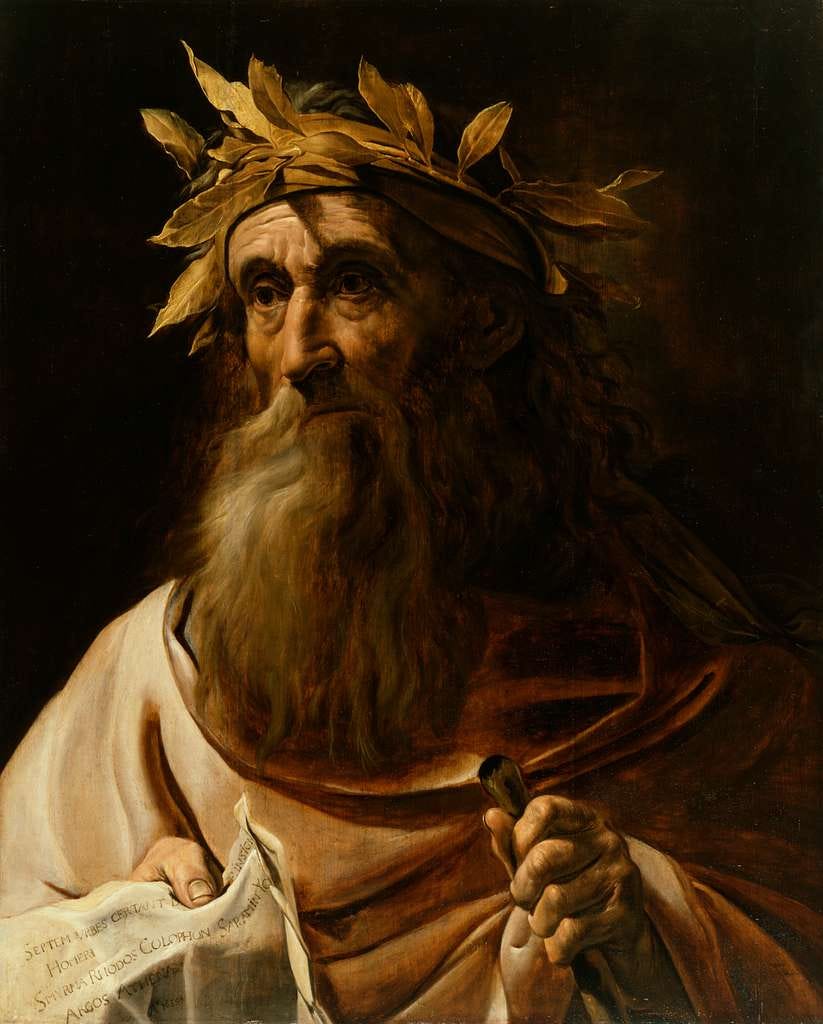
We can begin with no one better than Homer, who likely lived in the 8th century BCE. He is, of course, famous for his two epic poems, the Iliad and the Odyssey. Some scholars believe these works were generational and orally transmitted over a long period of time. Homer may have been the sage who wrote them down after they had been told and retold countless times over the centuries. There are certainly anomalous historical clues contained within Homer’s poems that lead us to believe that they were compiled over many years, perhaps centuries. You can read more about these theories in an online presentation nicely prepared by historian and writer, Daisy Dunn, for the British Museum.
Second only to Homer in his hoary-whiskered primacy as a primary literary source is our Aeolian friend, Hesiod, who lived perhaps at the same time or just after Homer, in the 7th century BCE. His major works include Theogony, which attempts to describe cosmology, and Works and Days was meant as a complete almanac to agriculture, morality, and astronomy, as well as a compendium of hymns and lesser poems, some of which are fragmentary or lost. Hesiod’s family was probably from a city on the Anatolian coast near the island of Lesbos, but he is thought to have moved and grown up in a little backwater hamlet near Thespiae in Boetia. This is interesting because there are a lot of important personages in the classics who came from that area, which Hesiod himself described as “a cursed place, cruel in winter, hard in summer, never pleasant.”[1]
Notwithstanding the bad weather, Hesiod’s works are very important, giving us a comprehensive look at the origins of the cosmos according to the legends and myths of his era, as well as the technologies and customs he thought were important for approaching everything from marriage to planting crops.
Herodotus (c. 484 – c. 425 BCE) was called the “Father of History” by the Roman senator and orator, Cicero.[2] He lived in vastly different places throughout his lifetime, beginning his life and education in the Anatolian city of Halicarnassus (near current-day Bodrum, Turkey), and ending his prolific career as a citizen of Thurii in Magna Græcia—modern Calabria, Italy. He wrote the definitive Histories circa 430 BCE, which is considered a founding document in Western history. In his magnum opus, Herodotus provides important information on not only the kings and tyrants, battles and intrigues of the Greek world, but also the first known study of the growth and power of the Persian empire. With all these laurels, Herodotus still had a critic, by the name of Thucydides (Yes, that Thucydides, the one who wrote the History of the Peloponnesian War), who claimed he wrote his histories for the sheer entertainment of his stories.[3]
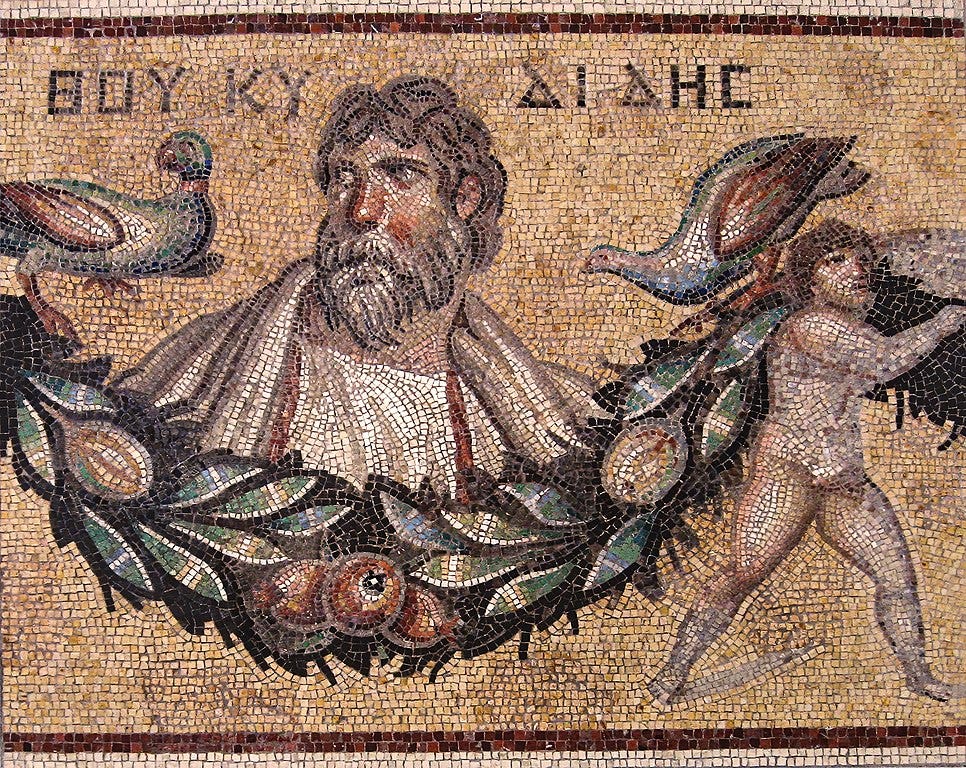
Speaking of the general of grumpiness, I should mention a bit about Thucydides (circa 460 – 400 BCE). He was an Athenian aristocrat and general who had a lot of opinions about his contemporaries. He crammed all his thoughts on realpolitik and the incompetence of his peers and democracy, into one big shade-fest known as the History of the Peloponnesian War. The general’s History is probably one of the most studied works from antiquity because its style is insightful, chronological, and amazingly lucid for someone who clearly had a bee in his bonnet all the time.
Diodorus Siculus, the great first century BCE Greco-Sicilian historian is probably one of my favorite sources, mostly because he wrote the monumental history known as Bibliotheca historica, in which there are thousands of glorious tidbits of information. Some of those bits might be wild exaggerations, but he gets four stars for his attention to detail. Diodorus wrote about Egypt and the rest of Africa, Asia, and Europe, as well as mythology, history, and geography. He has his haters, but don’t we all. Diodorus is, like him or not, an important resource for any student of antiquity.
Usually, my sources have several works under their belts, but in the case of Titus Livius (59 BCE – 17 CE), better known as Livy, well, his book the History of Rome, also known as Ab urbe condita, or Annales, was so nice they named it thrice. It is a monumental work detailing every possible angle at looking at Rome’s history from Aeneas to Augustus. In short, if you’re going to write something about Roman history, you’re going to need to start with Livy.
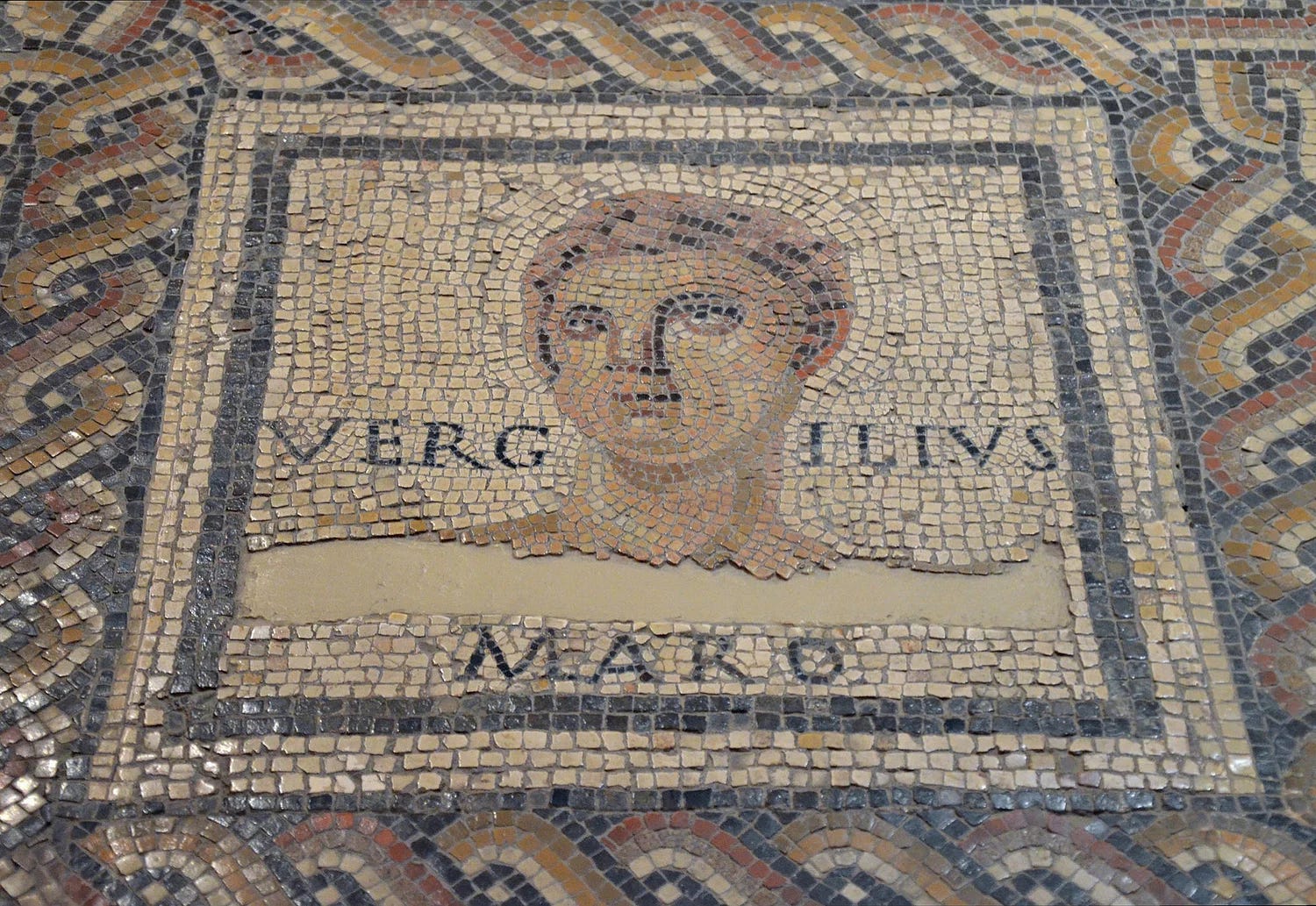
When it comes to sublime scholars and poets, nobody beats Publius Vergilius Maro, known to us in English as Virgil or Vergil (70 BCE – 19 BCE). If Livy wrote the definitive history of Rome, Virgil wrote its founding myth, The Aeneid. At a time when political instability made Romans question their own destiny and purpose, Virgil produced the third in the series of epic poems best loved in the West: what to follow Homer’s Iliad and Odyssey? The Aeneid, the epic which placed Aeneas, the refugee prince of Troy, at the center of a divine plot to found a new city; a great power that would rule the Mediterranean and beyond, from England to Syria, and from Germany to Algeria. In addition to the Aeneid, Virgil is also credited with writing some of the most beautiful Latin poetry in the form of the Eclogues (sometimes called the “bucolics”), and the Georgics. He is the writer who coined the phrase “omnia amor vincit”, or “love conquers all.”
If you have ever seen Lake Como in Italy, you will appreciate its great beauty. That place has given us more than just natural good looks—because it is the home to Gaius Plinius Secundus (24 –79 CE), known to us as Pliny the Elder. This great scholar from the north of Italy gave us something very special, indeed. Its name is Naturalis historia, or “Natural History”, which is the largest single work to survive intact from ancient Rome. It is also a massive, 37-book,10-volume encyclopedic look at just about everything under (and above) the sun including astronomy, mathematics, geography, ethnography, anthropology, human physiology, zoology, botany, agriculture, horticulture, pharmacology, mining, mineralogy, sculpture, art, and precious stones. It’s a whopper, and if you’re interested in ancient lore, you will find paradise in Pliny’s painstaking work.
There are so many other great sources of information on the classics, but we cannot cover all of them here, but I will drop the name of one of my favorites, and he is Macrobius Ambrosius Theodosius, known to the world as Macrobius. A 5th century CE scholar, Macrobius is especially interesting to me because he lived in Late Antiquity, when things were changing rapidly in Roman culture and religion. He is author of several important works on ancient Roman religious and antiquarian lore, including Saturnalia, and Commentarii in Somnium Scipionis (Commentary on the Dream of Scipio), which was one of the leading sources for Neoplatonism. Much of his work informed later scholarship in the medieval period to follow.
There are quite a number of sources that you may be more familiar with, such as the philosophers Aristotle and Plato, and the playwrights Aeschylus, Aristophanes, Euripides, Sophocles, and Thespis. Beyond these luminaries, there are the historians and orators, Thucydides, Cicero, and Plutarch. And let’s not forget Apollonius of Rhodes, the poet who gave us the Argonautica—better known as “Jason and the Argonauts.”
That will bring this little survey of sources to an end. I hope you found it interesting and useful! Also, if you are a regular reader and would like me to discuss one of your favorite classical sources, please let me know in the comments!
[1] Hesiod, Works and Days, 640
[2] Luce, T. James (2002). The Greek Historians. p. 26
[3] Hornblower, Simon; Spawforth, Antony; Eidinow, Esther (11 September 2014). The Oxford Companion to Classical Civilization. OUP Oxford. p. 372