
Plotinus and the Neoplatonists
A Brief History of the Platonic School of Late Antiquity

There are a few gifts from the ancient world which have made a lasting impact on the way we think, live, and project our ideas into the future. Neoplatonism, the school of philosophy and theology championed by a few wise men and women, including the famous Hypatia of Alexandria, was a jewel among those gifts from late antiquity. And it all came together under the quill of a Greek-speaking Egyptian named Plotinus.
Plotinus (born 205 CE, Lyco, or Lycopolis, Egypt—died 270, Campania, Italy) was a major Hellenistic philosopher who founded the school of thought known as Neoplatonism. His philosophical system is laid out in the Enneads, a collection of his treatises edited by his student, Porphyry. Plotinus’s work is essentially a reinterpretation and systematic synthesis of Plato’s philosophy, but it also incorporates elements from Aristotle and Stoicism.
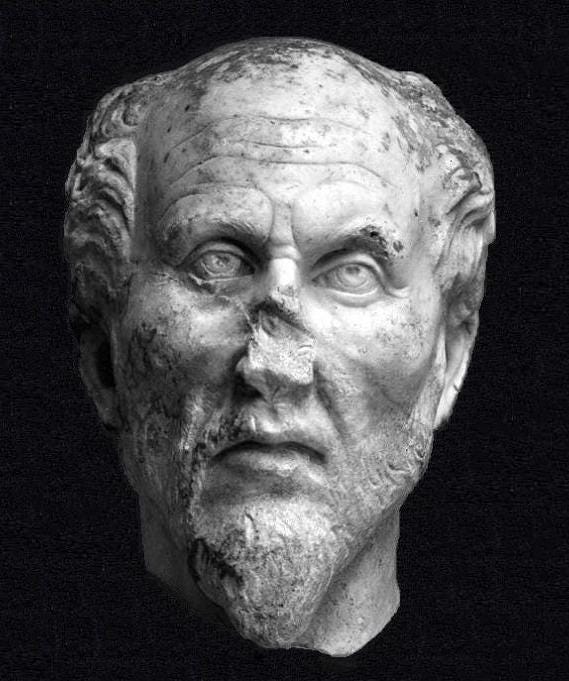
The core of Plotinus’s philosophy revolves around a hierarchical and emanational model of reality, which he describes as the “Three Hypostases” or three fundamental principles. The first and highest principle of all existence for Plotinus is the “One.” It is simple, utterly transcendent, and beyond all being and thought. The One is the source from which all things emanate, not through creation or a physical act, but as a spontaneous overflow, like light emanating from the sun. It is a concept that is both a radical departure from and a natural extension of Plato's Form of the Good. (Ennead V.1)
The second hypostasis for Plotinus is the Intellect (Nous), which is the first emanation from the One. The Intellect is a divine mind that contains the world of Platonic Forms (Ideas). It is the realm of perfect, eternal thought, and it simultaneously thinks and is the object of its own thought. (V.1.7.)
Plotinus’s third hypostasis is the Soul (Psyche), which he saw as being the second emanation, which proceeds from the Intellect. The Soul acts as the bridge between the spiritual and material realms. It contains both a higher, universal aspect (World-Soul) and individual souls. The individual soul’s goal is to ascend back to the Intellect and ultimately, to unite with the One. (V.1.3, and further elaborated in V.1.7)
Plotinus believed that the material world is the lowest and final emanation, a necessary consequence of this process. It is a reflection of the spiritual world, but also the most distant and imperfect. His philosophy is not just a metaphysical system; it is also a practical guide for achieving spiritual purification and ultimate reunion with the divine source. He stressed the importance of intellectual and spiritual contemplation, ascetic practices, and ethical living as a path to this mystical union.
Plotinus’s formidable works have come to us largely thanks to his student, Porphyry. Porphyry's most significant contributions to Plotinus’s work were primarily editorial and organizational, making his teacher's dense philosophy accessible to a wider audience. He did not introduce new philosophical concepts, but rather clarified, structured, and contextualized Plotinus’s ideas. Porphyry is the reason we have the Enneads in their current form. Plotinus wrote his treatises in no particular order, with a chaotic style and poor handwriting. Porphyry collected and edited these works, organizing them into six books of nine treatises each (the word Ennead means “group of nine”). This thematic arrangement, from ethics (Ennead I) to cosmology and the highest principles (Enneads V and VI), provides a structured and logical path for readers to follow Plotinus’s thought.
Porphyry authored the Life of Plotinus, a preface to the Enneads. This work is an invaluable primary source for understanding Plotinus’s life, his character, his teaching methods, and the intellectual community in which he worked. It is our main source of biographical information about Plotinus and provides context for his philosophical works.
While not a direct addition to the Enneads, Porphyry’s most influential contribution to philosophy was the Isagoge (Introduction). This work served as an introduction to Aristotle’s logic, specifically his categories. By explaining Aristotle’s logic in a way that was compatible with Neoplatonism, Porphyry helped to synthesize Platonic and Aristotelian thought, a major project of later Neoplatonists. This work became a standard logic textbook for over a thousand years in both the Greek and Latin philosophical traditions.
The next great figure in the Neoplatonic school after Plotinus and Porphyry was Iamblichus (born at Chalcis (Qinnašrīn), Syria, c. 245 CE–died c. 325 CE). Often referred to as “the divine Iamblichus” by his followers, he fundamentally transformed the direction of Neoplatonism. While Plotinus and Porphyry’s philosophy focused on intellectual contemplation and spiritual purification to achieve a mystical union with The One, Iamblichus introduced a new emphasis on theurgy.
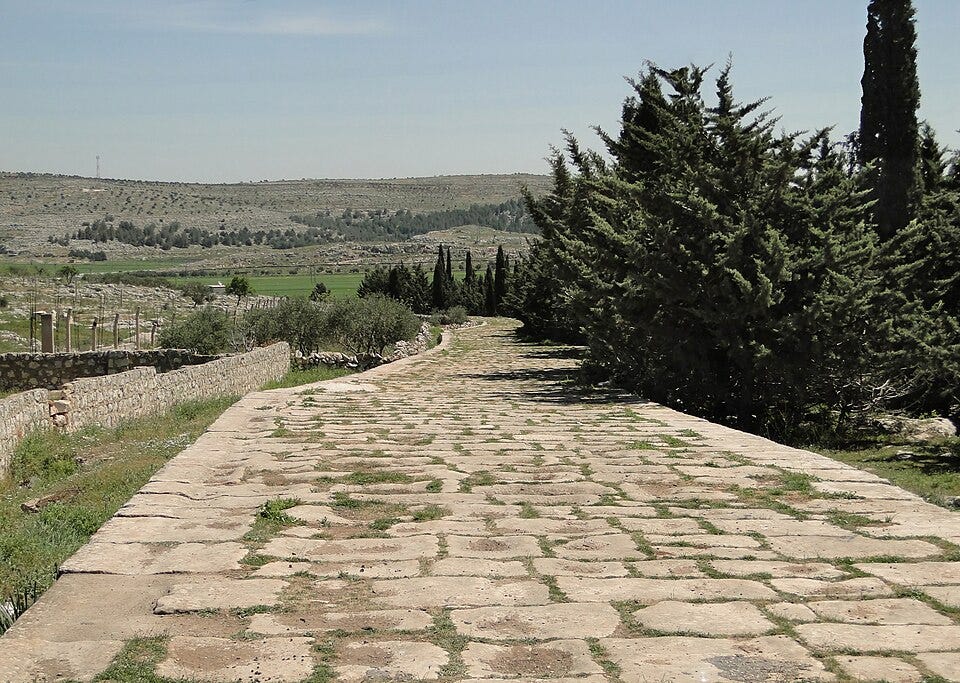
Iamblichus believed that philosophical contemplation alone was insufficient for the soul to ascend to the divine. He argued that since the human soul has fully descended into the material world, it needs ritual and divine intervention to reconnect with the gods. Theurgy (literally “divine work”) involved a complex system of ritual practices, ceremonies, and incantations meant to invoke the gods and facilitate a direct, purifying connection between the human and the divine. (See: On the Mysteries of the Egyptians, Chaldeans, and Assyrians. Specifically, in Book II, Chapter 11)
This shift marked a profound departure from Plotinus’s more intellectual and ascetic approach. It reflected a broader cultural trend in late antiquity that sought personal salvation through ritual and mystery cults. Iamblichus’s works, particularly his book On the Mysteries of the Egyptians, Chaldeans, and Assyrians, became the cornerstone of this new, religiously-oriented Neoplatonism. Iamblichus greatly expanded and complicated Plotinus’s simple three-hypostasis model, adding many more levels and intermediaries between the One and the material world. This created a more elaborate and detailed metaphysical system that could accommodate the gods, angels, and demons of various Greco-Roman and Near Eastern religions.
Iamblichus considered the Chaldean Oracles, a collection of mystical and spiritual texts, to be divinely inspired. He used them as a key source for his theology and for justifying the practice of theurgy. Iamblichus also founded a highly influential Neoplatonic school in Apamea, Syria, which shaped the philosophy of later thinkers like Proclus and the last polytheistic Emperor, Julian.
Next among the great Neoplatonists was Proclus (born Constantinople c. 412–died Athens, 485 CE) who came onto the scene in the mid-5th century. After studying in his native Constantinople and Alexandria, he moved to Athens in his late teens. Proclus eventually became the head of the Platonic Academy in Athens, a position he held for nearly fifty years until his death. Proclus stands as the final great systematic philosopher of the classical world. He inherited the philosophical traditions of both Plotinus and Iamblichus and created a monumental synthesis of their thought. While he deeply revered Plotinus’s work, his own philosophy followed the Iamblichan model of expanding the hypostases into a more complex, hierarchical system.
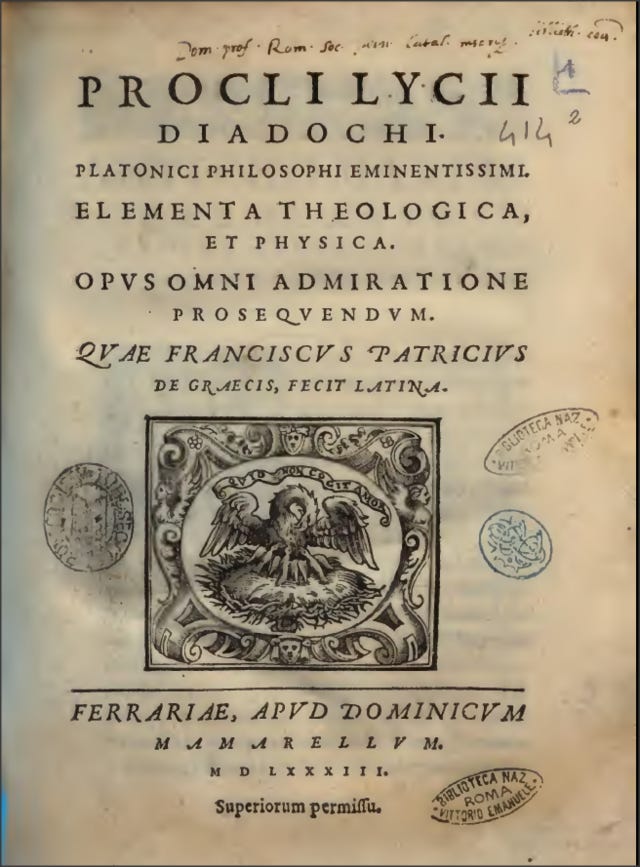
Proclus’s magnum opus was his meticulous organization and logical systematization of Neoplatonism. His work, particularly Elements of Theology, is written in a theorem-like format with 211 propositions, each followed by a proof. This work became a definitive summary of Neoplatonist metaphysics for later thinkers. Like his predecessor Iamblichus, Proclus saw a crucial role for theurgy. He believed that the intricate, systematic structure of the cosmos required a similar, ritualistic path for the soul to ascend. He actively practiced theurgy and viewed it as a divine science necessary for salvation.
Proclus’s most direct and thorough discussion of theurgy is found in his work, On the Hieratic Art according to the Greeks (also known as On the Priestly Art). In this text, he argues for the crucial role of theurgy by stating that it is a practice that can “bring divine powers into the region of mortals.” He emphasizes that philosophical contemplation is not enough for the human soul to unite with the divine because the soul is full of divine symbols but is not a god itself. Theurgical rituals are necessary to awaken and activate these symbols, enabling the soul to ascend.
Proclus describes theurgy as an art that works through the principle of sympathy (the natural connection between things) and likeness. He explains that theurgists use material objects as a means to contact the gods because the gods' powers (known as henads) extend down a chain of causation into the material world. A classic example Proclus provides is the use of stones, plants, and animals that have a sympathetic connection to a specific deity. For instance, he notes that animals like the lion and the cock are considered solar animals, partaking in the nature of the sun god, Helios. The theurgist would use these objects as symbols or tokens (synthêmata) to create a ritual that aligns with the divine power. (See: Commentary on the Cratylus, 51.10–55.25)
The legacy of the Neoplatonist thinkers—Plotinus, Porphyry, Iamblichus, and Proclus—is profound and far-reaching, influencing Western and Eastern thought for over a millennium. They had a significant impact on theology, philosophy, and mysticism, shaping our understanding of the divine, the human soul, and the cosmos.
The Neoplatonists’ core ideas became a foundational element for both Christian and Islamic theology. Thinkers like Augustine of Hippo and Dionysius the Areopagite used Neoplatonic concepts to explain the nature of God as a transcendent One and the creation of the world through emanation. The Arabic world saw philosophers like Al-Kindi and Al-Farabi integrate Neoplatonism into Islamic thought, while the Jewish philosopher Maimonides used it to reconcile faith and reason. During the Renaissance, the rediscovery of Neoplatonic texts, particularly those of Plotinus, revitalized the Platonic tradition and fueled the development of modern science and art.
The Neoplatonists' ideas still offer valuable insights today. Neoplatonist philosophy presents a holistic view of reality, where the cosmos is seen as a single, interconnected whole. This perspective resonates with modern concepts of systems theory and the interconnectedness of all life. Plotinus’s emphasis on withdrawing into yourself to find truth speaks to the importance of inner reflection and mindfulness in an increasingly distracting world.
The Neoplatonists also encouraged the aspiration to a higher self, urging us to see ourselves as more than just physical beings and to strive for personal growth and ethical improvement. Finally, the attempts by the Neoplatonists to bridge the gap between abstract, spiritual truth and the physical world offer a framework for those who seek to reconcile science with a sense of wonder and purpose.
***
Bibliography and further reading
Iamblichus. On the Mysteries of the Egyptians, Chaldeans, and Assyrians. Book II, Chapter 11.
Plotinus. Enneads.
V.1.
V.1.7.
V.1.3.
Proclus. Commentary on the Cratylus. 51.10–55.25.
Proclus. On the Hieratic Art according to the Greeks.
Porphyry. Isagoge.
Porphyry. Life of Plotinus.
Chistyakova, O. V., & Chistyakov, D. I. (2023). "Reenvisioning Plotinus' Doctrine of the Triad in Byzantine Christianity as a New Type of Ethics." Religions, 14(2), 151.
Gerson, L., & Wilberding, J. (Eds.). (2022). The New Cambridge Companion to Plotinus. Cambridge University Press.