
The Sacred Grove
The Divine Woods of the Græco-Roman World

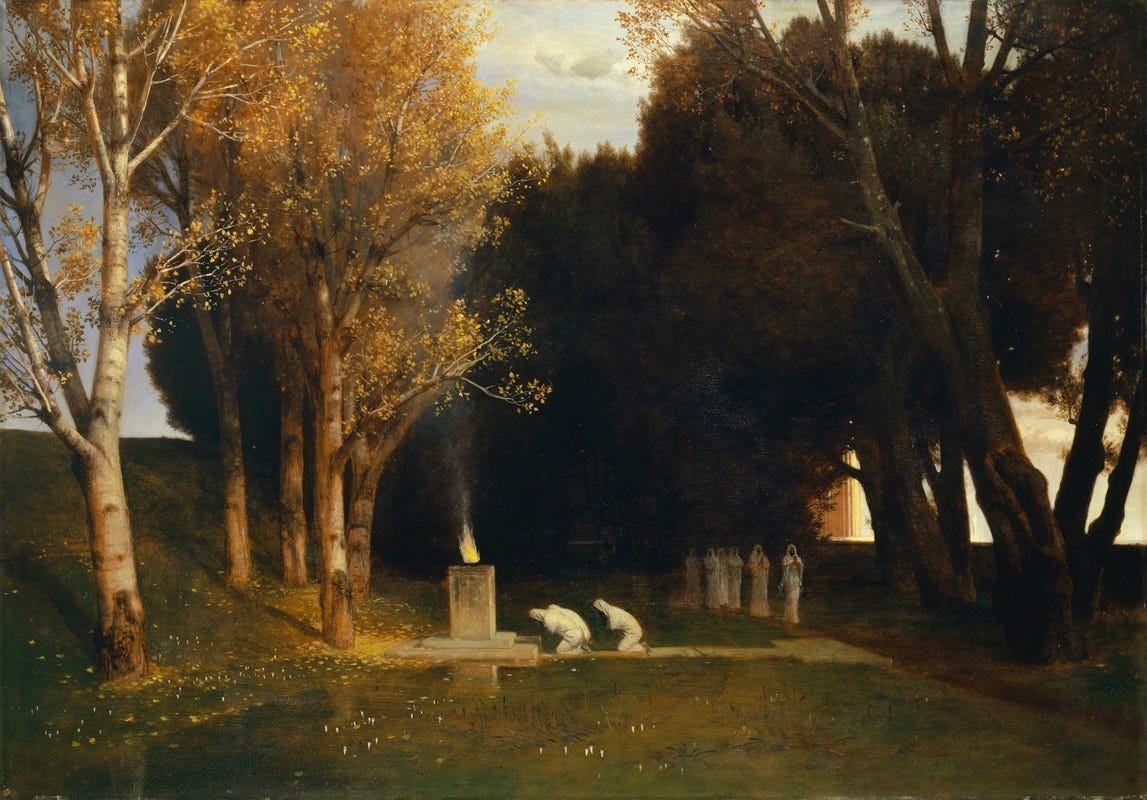
In troubling times, humans all over the world have long sought refuge among the leaves and branches of sacred groves and forests. We now know that interaction with nature brings with it significant health benefits, among which we can count lower blood pressure, a boost to our immune system, the acceleration of healing, mental acuity, and better sleep.[1] But for the ancients, there was an unmistakable connection between certain groves and forests, and specific deities and spirits.
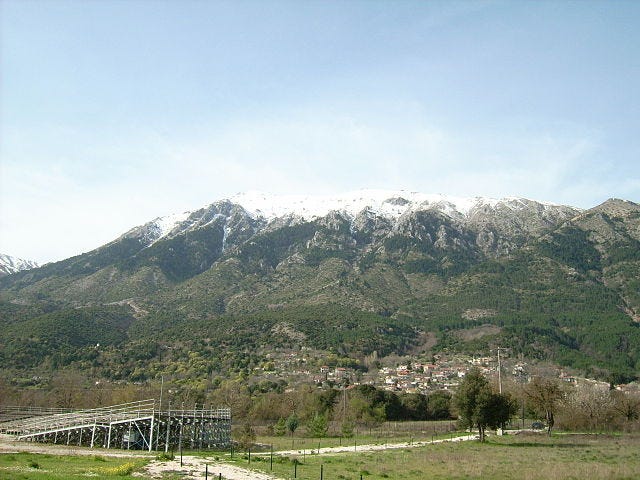
One of the oldest known sacred groves consisted of oaks and beeches at Dodona, in northwestern Greece. Dodona likely dates from the 2nd millennium BCE, meaning that it was a sacred space to the ancient Greeks, first under the auspices of a mother goddess such as Rhea or Dione[2], and much later under Zeus.[3] Just imagine the immense antiquity of this natural sanctuary which was revered as many centuries before the classical period as we are separated from the ancient Greeks ourselves. The oracle at Dodona’s sacred grove, which was second only to Delphi in importance, is believed to have been interpreted through the chiming of bronze ornaments which were hung among the oaks.[4]
The sanctuary of Diana Nemorensis is yet another important sacred grove, about 16 miles from Rome on the Via Appia Antica. My regular readers will remember a recent article I wrote about this particular grove and its relation to the worship of Diana, whose sanctuary was built in the Etruscan period.[5] But there are many other interesting examples of forests and groves which were set apart as being sacred. Among some of the most interesting examples include:
Spoleto, Umbria (Italy) still has two stone tablets from the 3rd century BCE with archaic Latin inscriptions of the Lex Luci Spoletina, which were warnings and punishments to those who dared to desecrate the woods sacred to Jupiter in that town.[6]
The sacred grove at Pesaro (Lucus Pisaurensis) in the Marche region of Italy boasts 14 Sabine votive stones which were dedicated to the Sabine gods Salute (Salus), Feronia, Marica, and Lucina, as well as the better-known Apollo and Juno.[7] These tablets, along with a terra cotta border, which demarcated a sacred grove, date from about 400 BCE.[8]
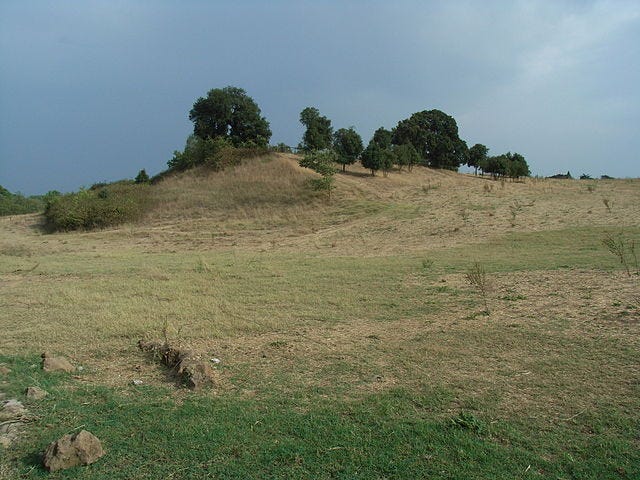
The sanctuary of Demeter in Rome’s Caffarella Park is perhaps one of the most compelling examples of an original sacred grove simply because it still stands intact, though much diminished in size. Not far from the sanctuary of Diana Nemorensis, this sanctuary still has a cluster of holly trees (ilex). The presence of this species is exciting because the writer Juvenal (55-128 CE) himself mentions them, along with the Greek geographer Pausanias (110-180 BCE).[9] Groves like the one at Caffarella very often had both oaks and other wild trees such as beech and pine, combined with fruit and blossom orchards. This combination of trees was meant to remind people that Demeter, as mother goddess of nature and agriculture, must be properly venerated and thanked for the gift of cultivation, lest we return to our hunter-gatherer days when we found ourselves eating acorns which had fallen from her oaks. [10]
Throughout the Græco-Roman world, it is clear that special woods were not only protected by law, but also formed the core of spiritual practices. We can see this, for example, in the fact that adjacent to the Temple of Vesta in Rome, there was an ancient grove which lasted until the great fire of 64 CE.
Whatever their significance to the ancients, it is especially comforting to know that sacred groves still stand in the world today, and that we can reconnect both to ourselves and to nature under their beautiful boughs.
***
[1] See Immerse Yourself in a Forest for Better Health, New York State Department of Environmental Conservation, for a list of scientific research and studies on the health benefits of forests.
[2] Dione; Ancient Greek: Διώνη, worshiped as a mother goddess who presided over the oracle at Dodona, Greece and was called the mother of Aphrodite.
[3] "...Greek gods too, especially Zeus the sky-god, were at home on Mt. Olympus and in Pieria, and the Zeus of Dodona derived his importance from the Bronze Age when he displaced a Mother Goddess and assimilated her as Aphrodite." Hammond, Nicholas Geoffrey Lemprière (1986). A History of Greece to 322 B.C. Oxford, UK: Clarendon Press, p. 39.
[4] Harissis, Haralambos. "A Bronze Wheel from Dodona. The Iynx, the Cauldron and the Music of the Gods". In 'Σπείρα. Επιστημονική Συνάντηση Προς Τιμήν Της Α. Ντούζουγλη Και Του Κ. Ζάχου'. Tapa. Athens. 2017.
[5] See: The Mirror of Diana: The Sacred Grove & Sanctuary of Diana Nemorensis, 7 September 2024.
[6] National Archeological Museum of Spoleto Archived 2006-05-08 at the Wayback Machine website entry for the exhibit of the inscribed stones
[7] Roman Votive Stones, http://www.italythisway.com/places/articles/pesaro-history.php
[8] Etymology Pisaurum, http://www.italythisway.com/places/articles/pesaro-history.php
[9] Juvenal, Satire 3.10-20
[10] Kathryn Lucchese, “Landscape Synchesis: A Demeter Temple in Latium”; Mystic Cults in Magna Græcia, (G. Casadio and P. Johnston, eds), University of Texas Press, Austin: 2009, pp. 178-179